
Most affiliate contests fail the same way: they reward first place, maybe second and third, and leave the other 97% of your affiliates feeling like spectators. Here’s how to run a contest that actually moves more affiliates off the sidelines and into action.

What is an affiliate contest and how does it work?
An affiliate contest is a time-limited competition where affiliates earn prizes, cash, or recognition for hitting sales targets or climbing a leaderboard. The idea is simple: give your affiliates a reason to go harder than they normally would.
But there’s a version of this that actually works, and a version that quietly frustrates most of your affiliate base.
The most common setup is a straight leaderboard. The top 3 or top 5 affiliates by revenue win. That’s it. The problem is that this only motivates affiliates who already know they can win. If someone has a list of 2,000 people and sees they’re competing against affiliates with lists of 50,000, they’re not going to suddenly mail three extra times. They’ll do what they were already going to do, or nothing.
A well-structured contest solves that by making winning feel possible for affiliates at every level. When it feels winnable, more people compete. When more people compete, total sales go up, often dramatically.
The structure matters more than the prize size. I’ve seen contests with $500 total in prizes outperform contests with $5,000 in prizes, purely because the structure gave everyone a shot.
How do you structure an affiliate contest so more affiliates participate?

The answer is tiered prizes with milestone rewards built in.
Here’s what that looks like in practice. Instead of rewarding only the top finishers on a leaderboard, you create multiple ways to win simultaneously.
Tier 1: Leaderboard prizes. Keep the top 3-5 spots with meaningful prizes. This rewards your heavy hitters and gives ambitious mid-level affiliates something to chase. Cash works fine here. An experience-based prize, a trip, a mastermind seat, or a piece of gear the affiliate actually wants, often performs even better.
Tier 2: Milestone prizes. Set sales thresholds that any affiliate can hit, regardless of their list size. Something like: make 10 sales and get a $100 bonus, hit 25 sales and get $300, hit 50 sales and get $750. These milestones mean a smaller affiliate with a 1,500-person list can still “win” even if they finish 40th on the overall leaderboard.
Tier 3: Percentage increase prizes. Award affiliates who show the biggest improvement over their own past performance. If someone doubled their sales from your last promo, they win something, even if their raw numbers are modest. This one is underused and wildly effective for reactivating dormant affiliates, because it tells them they don’t need to compete with anyone but their past self.
The result of layering these three tiers? More emails sent. More social posts. More effort from people who otherwise would have quietly promoted once and moved on.
If you want to go deeper on how leaderboard mechanics affect affiliate psychology, this breakdown of affiliate leaderboard best practices covers the why behind what makes them work.
What prizes actually motivate affiliates?
Cash is safe. Cash works. But cash alone won’t create the buzz that makes your contest feel like an event.
Tangible prizes outperform cash in head-to-head tests, and the reason is simple: cash gets absorbed into the mortgage. A trip to the Kentucky Derby, a weekend in Vegas, a Porsche for a week, those things get talked about. An affiliate tells their audience they’re chasing a cool prize. They screenshot the leaderboard and post it. They get emotionally invested in a way that a $500 deposit into their PayPal account just doesn’t trigger.
The prize doesn’t have to be expensive. It has to be specific and aspirational for your affiliate base. Know who your affiliates are. A Kindle Paperwhite or a premium course means more to a solopreneur affiliate than a Salesforce subscription.
For smaller contests or evergreen programs, gift cards, product credits, or access to premium training work surprisingly well. The goal is to give people something to mentally hold onto.
One thing to avoid: prizes that only make sense if you win the grand prize. If first place wins a $2,000 trip and everything else is a $25 gift card, most affiliates will see the gap and disengage. Keep the prize value graduated, not a cliff.
For a deeper look at how to choose prizes based on your budget and affiliate type, this post on picking prizes for your affiliate launch walks through exactly that.
How long should an affiliate contest run?

The sweet spot for most contest lengths is 7-14 days. Long enough for affiliates to ramp up, short enough to keep urgency alive.
Here’s why shorter usually wins. A 30-day contest gives affiliates 25 days to procrastinate. The first week is quiet because “there’s plenty of time.” The last few days get frantic, but you’ve lost three weeks of potential momentum. A 10-day contest keeps people in competition mode from day 2 onward.
That said, the length should match what you’re asking affiliates to do. If you’re running a product launch with a natural open-close cycle, run the contest for the duration of the launch. If this is an evergreen program contest, 7-10 days with a clear start and end drives better results than a vague “monthly contest” where no one knows when to push.
One of the most common problems with longer contests is the mid-promo slump. Affiliates come out strong, stall in the middle, and then scramble at the end. You can read about how to beat the mid-promo slump in affiliate launches for specific tactics to keep momentum alive during that quiet stretch.
The fix is building momentum triggers into the contest timeline rather than hoping affiliates stay fired up on their own.
How do you keep momentum going once the contest starts?
Momentum doesn’t maintain itself. You have to actively create it.
Here’s what works.
Daily or every-other-day leaderboard updates. Send affiliates a quick email with the current standings. Keep it short. Just the top 10, who moved, who’s close to a milestone prize. Affiliates who see their name on a leaderboard work harder. Affiliates who don’t see their name but see they’re 2 sales away from 25th place also work harder. The update is the nudge.
Call out movement, not just winners. When someone jumps 8 spots in a day, send a note to the group. “Big move from Sarah today, she went from 15th to 7th in 24 hours.” This isn’t about the person at the top, it’s about creating the feeling that this is a live, real competition and anything can happen.
Offer mid-contest bonus incentives. A flash prize for whoever makes the most sales in a 24-hour window. Double points on a specific day. These inject urgency into the middle of the contest when things naturally slow down.
Personal outreach to affiliates who are close. If someone is 3 sales away from a milestone, a personal email or text saying “You’re this close, I’d hate for you to miss it” almost always moves them. It’s human. It works.
If you have affiliates who haven’t engaged at all, the contest is a perfect excuse to reach out. This guide on how to activate inactive affiliates has specific approaches that apply directly here.
Want templates for sending those contest update and activation emails? The Affiliate Activation Templates are the exact emails I use to turn dormant affiliates into active promoters, and they work just as well during a live contest.
Need help activating your affiliates? Use my proven email templates for getting inactive affiliates in the game and making sales! Get them here!

What’s the difference between a contest for a launch versus an evergreen program?
The core mechanics are the same, but the context changes how you run them.
Launch contests have a built-in deadline, which is a massive advantage. The cart closes, the promo ends, and that creates natural urgency that you don’t have to manufacture. Your job is to layer contest energy on top of that existing urgency, not to create the urgency from scratch. You can run a leaderboard, milestone prizes, and flash bonuses, and the overall launch timeline keeps everyone moving.
The main pitfall with launch contests is affiliates who feel too small to compete. If your program has a mix of large and small affiliates, lean hard into the tiered and percentage-increase prize structures so smaller affiliates stay engaged through the full launch, not just the first few days.
Evergreen program contests require you to manufacture urgency that doesn’t exist naturally. You’re essentially saying “from this date to this date, let’s compete.” That works, but it requires more communication, more energy in your updates, and more creative prize structures to make it feel like an event.
For evergreen programs, shorter and more frequent contests often beat a single annual blowout. A 7-day sprint every quarter keeps your affiliate base in a rhythm of expecting and preparing for contests. Over time, affiliates start to anticipate your contest calendar and hold their promotional energy for those windows.
You can also run affiliate contests without a big prize budget by leaning on recognition, exclusive access, and co-marketing opportunities rather than straight cash prizes.
How do you measure whether your affiliate contest worked?

Don’t just look at total revenue. That tells you if the contest made money, not whether the contest itself drove behavior change.
The metrics that actually matter:
Participation rate. What percentage of your affiliates made at least one sale during the contest? If 200 affiliates are registered in your program and 15 made sales, that’s a 7.5% participation rate. If your next contest produces a 12% rate, the contest design improved, even if total revenue stayed the same.
Average sales per active affiliate. If your top 10 affiliates drive most of the revenue, dig into what your 11th-through-50th affiliates did. Did they produce more than usual? That’s where contest design actually shows up.
Number of new affiliates making first sale. A good contest should pull in affiliates who have never promoted before. Track how many people made their first-ever sale during the contest window.
Post-contest retention. Did affiliates who engaged during the contest stay active in the weeks after? A contest that burns people out or sets expectations you can’t maintain is worse than no contest at all.
Compare these numbers across contests over time, and you’ll start to see clearly which prize structures, contest lengths, and communication cadences actually work for your specific affiliate base.
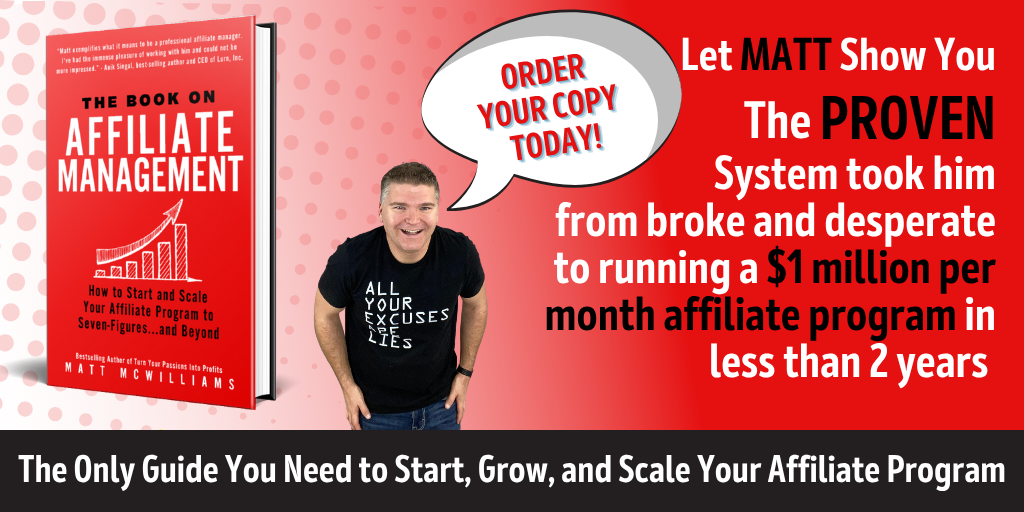
The Book on Affiliate Management covers the full system for structuring contests inside a larger affiliate program strategy. If you’re building or scaling a program and want the complete picture, grab a copy here. It’s the 300+ page playbook that covers everything from your first affiliate to eight-figure programs.
Common affiliate contest mistakes to avoid
A few patterns kill contests before they ever get going.
Announcing the contest too late. Affiliates need lead time to plan their promotions, write emails, and warm up their audiences. Announcing a contest the day before it starts almost guarantees low participation. Two weeks of advance notice is the minimum. Three is better.
Making the rules complicated. If an affiliate has to read three paragraphs to understand how they can win, they won’t bother. One page, bullet points, here’s what you win and here’s how you win it. Done.
No communication during the contest. You announce it, it starts, and then silence until the winner is announced. That’s not a contest, that’s a tournament bracket that nobody follows. You need to be in your affiliates’ inboxes throughout the contest window.
Paying out slowly. If an affiliate wins a prize and it takes 60 days to receive it, they’ll be less excited about the next contest. Pay out fast. When you do, make a small event out of it, a congratulations email, a social post, a screenshot of the payment confirmation. It builds credibility for future contests.
Picking prizes that don’t fit your audience. If your affiliates are mostly bloggers and online creators, a box of branded merchandise isn’t exciting. Know who your affiliates are and pick prizes they’d actually want.
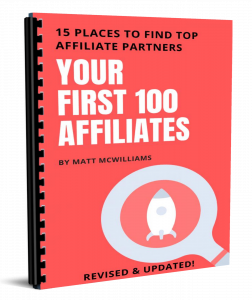
If you’re just getting started with your program and haven’t yet built the affiliate base to run a contest, the free Your First 100 Affiliates report covers how to recruit and build that base. No point designing a contest if there’s nobody to compete.
Questions?
Text me anytime at (260) 217-4619.
Or…check out some of my free reports to help you get on the right track:
 |
 |
 |
 |
 |
 |
 |
 |
 |