Most affiliate programs focus on recruiting. The ones that win focus on activation. Specifically, getting new affiliates to their first sale as fast as possible. That single milestone changes everything about how an affiliate behaves, how long they stick around, and how much they eventually earn for your program.

Why the first sale is the hinge point of every affiliate relationship
An affiliate who makes one sale is a fundamentally different person than one who hasn’t. The research behind this isn’t complicated: people repeat behavior that produces results. When a new affiliate sends their first email or post and a sale comes back, something clicks. They stop thinking of your program as a side experiment and start treating it like income.
The reverse is equally true. An affiliate who signs up and never converts usually doesn’t come back. They go quiet, get distracted by other things, and eventually become part of that depressing statistic: the average affiliate program activates only about 5% of the people who join it. That means 95 out of every 100 affiliates who raise their hand to promote you never actually do.
That number isn’t inevitable. It’s a failure of activation systems, not affiliate motivation.
In the Shutterfly-Tiny Prints program, a single targeted push to inactive affiliates, sent in less than a week, reactivated nearly 4,500 of them and generated more than $250,000 in additional revenue in the following year. The affiliates didn’t suddenly get better. They just got a reason to act. Your job as an affiliate manager is to create that reason before they go dormant in the first place.
What stops affiliates from making that first sale

Three things kill affiliate momentum before it starts. Understanding which one is affecting your program tells you where to push.
The first is confusion about what to do. New affiliates often sign up with the best intentions and then stall because they don’t know where to begin. They’re not lazy. They’re lost. If your affiliate onboarding doesn’t give them a clear first action, they’ll default to doing nothing.
The second is missing or unusable promotional materials. This is more common than it should be. Affiliates open the partner portal, see a generic banner and a form email, and conclude that the program isn’t serious. What they actually need is specific, ready-to-send swipe copy, ideally personalized to their audience type. When you create quality swipe copy for your affiliates, you remove the most common excuse for not promoting: “I don’t know what to say.”
The third is timing. An affiliate who signs up but doesn’t promote within the first 14 days is dramatically less likely to ever promote. They meant to. Life got in the way. Without a structured first-sale push from you, that window closes fast.
The first-sale activation sequence that actually works
Getting a new affiliate to their first sale isn’t a single email. It’s a short sequence, timed well, with one clear goal: help them make money.
Day one is the welcome. Your new affiliate onboarding message should do three things: confirm they’re in, give them their link and resources, and tell them exactly what to do next. Not five things. One. “Here’s your link. Here’s an email you can send today. If you send it, reply and let me know.” That’s it.
Day three is the check-in. Something like: “Hey, just making sure you got everything okay. If you sent an email already, that’s awesome. If not, here’s a two-paragraph version you can copy and paste right now.” This isn’t nagging. It’s the nudge that separates programs with 5% activation rates from programs with 30%.
Day seven is the first-sale push. If they haven’t promoted yet, make it even easier. Give them a single tweet or Facebook post instead of a full email. Attach a personal note. “I know your audience really well from what you told me, and I think this particular angle will work great for them.” Then offer to get on a 15-minute call if they have questions.
The affiliates who activate aren’t necessarily the most motivated ones. They’re often just the ones who got the right follow-up at the right time. Use the Affiliate Activation Templates to get proven email copy for every step of this sequence, including messages that have reactivated dormant affiliates in programs of every size.
Train them before they promote, not after

One of the most overlooked activation tools is a dedicated affiliate training. Not a PDF of tips. An actual walkthrough, ideally live or on-demand video, that shows new affiliates exactly how to promote effectively.
The best training covers the warm-up: how to introduce the product to their audience before the actual promotion starts. This is where most affiliates fall short. They try to sell something to an audience that has never heard of the product. That’s like a stranger at a party trying to close a deal. It doesn’t work. Warming up affiliate partners before a launch is the difference between a promotion that converts and one that disappears.
Training also covers the basics most managers assume affiliates already know: how many emails to send (more than they think), what to say in each one, how to use social media alongside email, and how to talk about the product in a way that sounds natural rather than scripted.
You can see exactly what this looks like in a real affiliate training used with a client program, including the slides: access the sample affiliate training here. It’s an actual training webinar, not a generic outline. If you’ve never run a formal training for your affiliates, this will show you what the bar looks like.
Personalize the path to first sale for your best prospects
Not every new affiliate needs the same approach. Some are email list owners. Some are bloggers. Some are social media creators with no list at all. The path to that first sale looks different for each one, and the affiliate managers who figure this out early get dramatically better results.
For email affiliates, the fastest route to a first sale is usually a single dedicated email sent to their list, with a solid offer and a strong call to action. Help them write it. Better yet, write it for them and let them customize it.
For bloggers, a review post or a “best of” roundup featuring your product can drive sales over a longer window. This takes more setup time, but it’s evergreen. One post can produce commissions for months or years.
For social media affiliates, shorter promotional bursts work better. Give them specific posts they can use, ideally personalized to their platform. A TikTok script looks nothing like a LinkedIn post. If you hand someone a generic block of text and tell them to post it, you’ve already lost. Writing platform-specific swipe copy is worth the extra 20 minutes per affiliate segment.
The most important thing in every case is this: don’t make the affiliate figure out the promotion strategy on their own. That’s your job. The best affiliate relationships are built on the manager making things easy, not the affiliate being especially motivated.
Celebrate the first sale immediately and loudly

When an affiliate makes their first sale, you have about 24 hours to cement the relationship. What you do in that window matters more than almost anything else you’ll do with that affiliate over the next year.
Send a personal message. Not a system-generated notification. A real message from you. Something like: “Congrats! You just made your first sale with us. The first of many. I know it from experience. Seriously, great work, and let me know if there’s anything I can do to help you hit more.” That’s it. Simple, personal, human.
This matters because commission size alone doesn’t drive affiliate loyalty. Feeling like they matter to the program does. An affiliate who gets a personal congratulations from their manager after their first sale is far more likely to promote again than one who just sees a transaction in their dashboard.
You can also set automated milestone triggers, but make the first-sale message personal even if everything else is automated. The first sale is the moment. Don’t let software handle it.
What to do when affiliates go inactive before their first sale
Even with a solid activation sequence, some affiliates will slip through without promoting. That’s not a permanent failure. It’s an opportunity to run a targeted reactivation push.
The best approach is a direct, honest message that acknowledges the gap without apologizing for it. “Hey, I noticed you joined our program a few weeks ago but haven’t promoted yet. That’s totally fine. I just wanted to check in, see if you have any questions, and let you know we have a great offer running right now that might be a perfect fit for your audience.” Then attach resources and make it easy to act.
In evergreen programs, treat anyone who hasn’t promoted within 30 days as inactive. Don’t wait six months. By then, they’ve forgotten you exist. The sooner you reach back out, the easier it is to restart the relationship.
For launch-based programs, the window is tighter. If an affiliate hasn’t sent a single click by day five of a 14-day launch, they’re statistically unlikely to promote at all without an intervention. Reach out by day three. Make it personal. Give them a reason to act today.
See the full playbook for reactivating both evergreen and launch-period affiliates in these two posts: how to activate inactive affiliates and the evergreen-specific activation system.
Build a system, not a hope
The affiliate programs that consistently get new partners to their first sale don’t rely on motivated affiliates. They rely on systems. Automated check-in sequences. Scheduled training calls. Milestone-based celebration messages. Personal outreach at the right intervals. Every step has a reason and a trigger.
If you’re managing your activation process manually right now, you can absolutely do it well. But at scale, manual follow-up breaks down. You miss people. The timing gets off. The follow-through varies based on how much time you have that week.
Building the system once means every affiliate gets the same quality experience regardless of how busy you are. That consistency is what separates programs with 5% activation from programs that consistently push 25-30%.
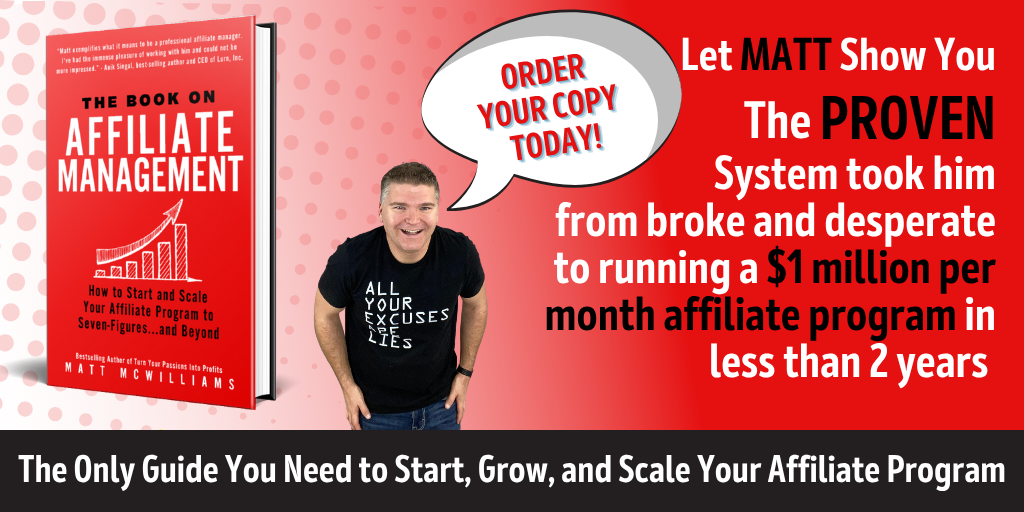
Everything covered in this post, the onboarding sequence, the training structure, the first-sale celebration, the reactivation push, is laid out in full detail in The Book on Affiliate Management. It’s the most practical resource available for affiliate managers who want to run programs that actually perform, not just recruit.
Frequently asked questions
How long should I wait before following up with a new affiliate who hasn’t promoted?
Three days is the right window for your first check-in after onboarding. By day seven, send a simplified version of the promotional materials and offer to help directly. Waiting longer than two weeks drops response rates significantly.
What’s the single most effective thing I can do to help an affiliate make their first sale?
Write the promotion for them. Give them a complete email or post they can send with minimal editing. The biggest barrier for most new affiliates is not knowing what to say, not a lack of motivation.
What percentage of affiliates should be making their first sale within 30 days?
In a well-run program with good onboarding and activation follow-up, 25-35% of new affiliates should make at least one sale within their first 30 days. Programs with no activation system typically see 3-7%.
Should I create different activation sequences for different types of affiliates?
Yes, where possible. Email list owners, bloggers, and social media affiliates each have different promotion paths. Even a simple two-segment approach, one sequence for email affiliates and one for content creators, will outperform a single generic sequence.
When is the right time to give up on an inactive affiliate?
In an evergreen program, send two to three reactivation attempts over 60-90 days. If someone hasn’t responded or promoted after that, remove them or set their account to inactive. In launch programs, reach out by day three if there’s no activity. If they don’t respond by day seven, move on and focus your time elsewhere.
Does the size of the commission affect first-sale rates?
Commission matters, but it’s rarely the primary barrier for affiliates who haven’t made their first sale. The bigger barriers are confusion, missing materials, and lack of follow-up. Fix those first. If activation rates are still low after building a proper system, then revisit commission structure.
Need help activating your affiliates? Use my proven email templates for getting inactive affiliates in the game and making sales! Get them here!