Affiliate contest software increases sales by giving every affiliate in your program something they can still win on day four, not just the five people at the top of the leaderboard. The mechanics matter more than the prize budget.
 Affiliate contest software increases sales for one reason that has nothing to do with how much money you put into the prize pool. It keeps more affiliates in the game for more days. A contest that only ranks people creates a small group of competitors and a very large group of spectators, and the spectators stop opening your emails around day two.
I’ve run programs where the total prize budget was $500 and programs where it was $50,000. The $500 contests sometimes produced a bigger lift. The difference came down to how the contest was built and how it was tracked, which is where most managers lose the thing.
So let’s talk about the operating side. Not the psychology, not the prize list, but the machinery that decides whether your affiliate in 14th place is still mailing on Thursday.
Why affiliate leaderboards increase sales
Leaderboards work because affiliates are competitive people who publish for a living, and a public ranking turns a private commission report into a scoreboard their peers can see. Money motivates them. Being seen next to names they respect motivates them more.
Dan Pink covered this in Drive: once people earn enough to stop worrying about money, mastery and status outperform cash as motivators. Affiliate contests run on exactly that. An affiliate who would shrug at an extra $400 in commissions will send two more emails to move from ninth to seventh.
The second thing a leaderboard does is create a deadline that isn’t your cart close. Affiliates procrastinate. A leaderboard that updates every few minutes gives them a reason to mail Tuesday instead of “sometime this week,” and Tuesday mailers outperform Friday mailers because they get a second and third touch in before the cart closes.
None of that is new. Matt’s covered it in 6 tips for using affiliate leaderboards and how to use affiliate leaderboards to skyrocket your sales. The part that gets skipped is what happens to the 90 people who aren’t in the top ten.
Why a ranked-only affiliate contest stops working by day two
 Run a straight top-five leaderboard with 100 affiliates and watch what happens. On day one, everybody checks. On day two, the affiliate sitting in 14th place with four sales looks at first place sitting on 61 sales and does the math. She can’t get there. She has a list of 2,400 people and the leader has 80,000.
She doesn’t quit the promo. She stops treating it like a competition. The three extra emails she was considering become one. Multiply that by the 85 affiliates below the top 15 and you’ve quietly deleted most of your upside.
The math on that is worth sitting with. One rockstar affiliate producing 60 sales feels like the win. But 85 mid-tier affiliates each producing 1.5 extra sales is 127 sales. You will almost always make more money by moving the middle than by squeezing the top, and ranked-only contests do nothing for the middle.
If you want the full breakdown of how to design the tiers themselves, prize types, thresholds, and what to award for, start with how to run an affiliate contest that actually motivates your affiliates. This post covers running one. That one covers building one.
How to run ranked prizes and threshold prizes at the same time
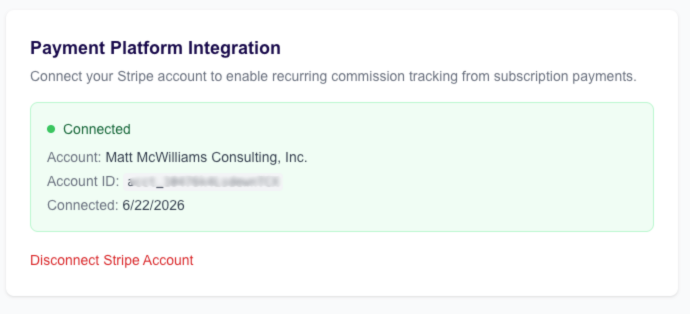
The fix is running two contests inside one promotion. A ranked contest for the people who can win it, and a threshold contest for everybody else, both live at the same time, both visible to every affiliate.
Ranked prizes go to positions. First through fifth, or first through tenth if your program is big enough. Threshold prizes go to numbers. Hit three sales, get something. Hit 10, get something better. Hit 25, get something better than that.
The affiliate in 14th place now has a target she can reach. She’s at four sales, the next threshold is ten, and ten sits six sales away instead of 57. She keeps mailing. Her personal contest has nothing to do with the leaderboard, but she’s still watching the leaderboard, because that’s where her threshold progress lives too.
Most affiliate platforms make this hard. They’ll track a leaderboard or they’ll track a bonus rule, and running both means you’re exporting reports and reconciling them by hand at 11pm. AffiliateHQ runs ranked prizes and threshold prizes simultaneously inside the same contest, so an affiliate can be 14th on the board and 100% of the way to her second threshold, and both show up in the same place without you touching a spreadsheet.
What a live affiliate leaderboard needs to do
A leaderboard you update by hand twice a day is a report. A leaderboard that updates itself is a contest.
That distinction shows up in affiliate behavior fast. When affiliates know the board is live, they mail and then refresh. When they know you post updates at 9am, they mail and check tomorrow. You lose the same-day feedback loop that makes people send the second email.
The other thing a leaderboard needs is more than one sort. Ranking by gross revenue tells your affiliates one story. Ranking by conversion rate tells a completely different one, and it’s often a smaller affiliate at the top. Sortable columns let an affiliate with 2,400 subscribers find the metric where she’s winning, and affiliates who find a metric where they’re winning keep promoting.
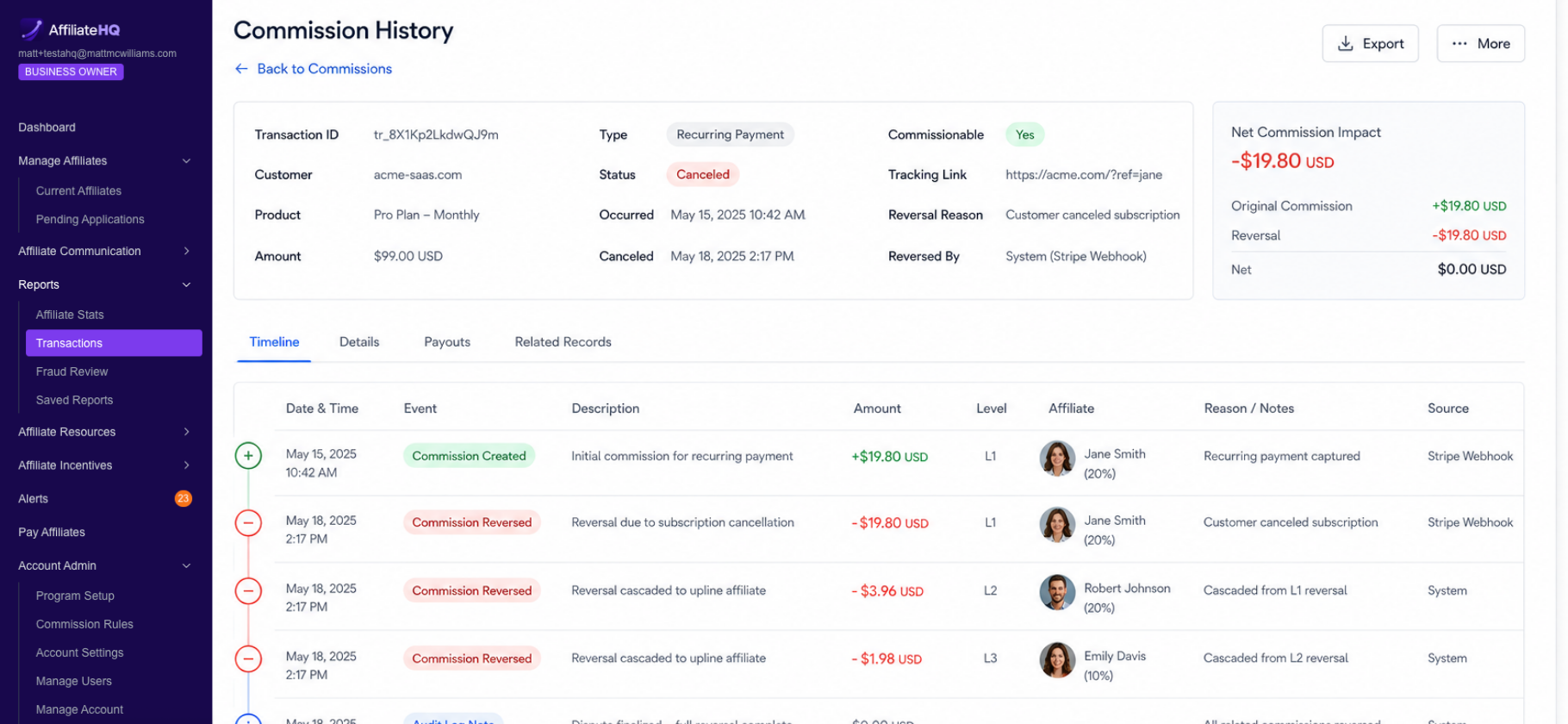
Sorting by EPC, opt-ins, refund-adjusted revenue, and unit count also tells you things about your own program. An affiliate ranked 30th on revenue and 2nd on conversion rate is someone you should be calling. Track those numbers year-round and you’re most of the way to the reporting covered in affiliate program KPIs every affiliate manager should track.
Want to see two of these contests from the inside, including the emails and the prize structures? Affiliate Contest Bonus Videos is a free behind-the-scenes walkthrough of two of the most effective contests Matt has run. It’s the fastest way to see the mechanics in a real promotion instead of in theory.
How personal bonus targets keep mid-tier affiliates in the game
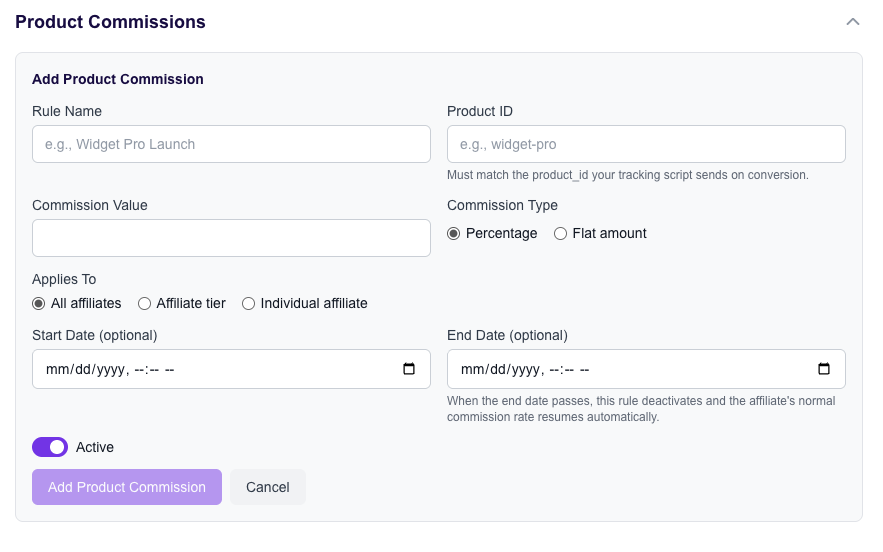
Threshold prizes are the same for everyone. Personal bonus targets are different for each affiliate, and they’re the single most underused mechanic in affiliate contests.
The idea is simple. You set a target based on what that affiliate did last time, then reward them for beating it. An affiliate who produced 12 sales in your spring launch gets a target of 18 for the fall launch. An affiliate who produced 40 gets a target of 55. Both are chasing something real, and neither is comparing herself to a list ten times her size.
Matt’s covered the compensation side of this in how to use performance bonuses to get your affiliates to go all-in and how to use tiered affiliate commissions to motivate your best affiliates. The operational problem has always been tracking. Setting 90 individual targets by hand is a Saturday. Checking them daily during a launch week is another Saturday.
` tracks personal bonus targets against each affiliate’s own history automatically. You set the rule once, the platform pulls each affiliate’s baseline, and every affiliate sees their own progress bar. Nobody has to email you asking where they stand, which alone saves a manager several hours during a launch.
Milestone badges that award themselves
 Badges sound like a small thing until you watch an affiliate screenshot one and post it.
A milestone badge is recognition attached to an event: first sale, tenth sale, first $1,000 in commissions, three launches promoted, top ten finish. It costs you nothing and affiliates chase them anyway, because status is a real currency in this business.
The value for you is the first-sale badge specifically. Most programs have a large group of affiliates who signed up and never promoted, and the single hardest number to move is zero to one. A badge that fires the moment an affiliate makes her first sale gives you a reason to email her, congratulate her publicly, and pull her into the active group. Matt covers this activation problem in how to grow your affiliate program quickly without adding new affiliates.
The catch is that manual badges don’t happen. You will not watch a dashboard during launch week to catch someone’s tenth sale. AffiliateHQ awards milestone badges automatically the moment the affiliate hits the number, and notifies them, so the recognition lands while the affiliate still cares.
A full affiliate contest structure you can copy
Here’s a structure that works for a program with roughly 100 to 300 affiliates and a $497 product. Total prize budget is about $4,000.
Ranked prizes. First place gets a $2,000 experience prize, something like Kentucky Derby clubhouse passes or a weekend trip. Second gets $750 in gear the affiliate picks. Third gets $400. Fourth and fifth get $200 each. Physical and experiential prizes outperform straight cash here, for the reasons Matt lays out in the easy way to pick awesome prizes for your affiliate launch.
Threshold prizes. Three sales earns a $50 bonus. Ten sales earns $150. Twenty-five earns $400. These stack with commissions and they’re open to everyone, including the affiliate who finishes 62nd.
Personal bonus targets. Beat your own result from the last promotion by 25% and earn a $100 bonus. Beat it by 50% and earn $250. New affiliates with no history get a flat five-sale target.
Milestone badges. First sale, tenth sale, first $1,000 in commissions, and a “beat your best” badge. No cash attached.
One 48-hour flash contest. Mid-promotion, usually the Tuesday or Wednesday after the weekend lull, most sales in 48 hours wins $300. Short contests inside long promotions pull affiliates back in right when attention drops.
That’s five ways to win running at once. An affiliate with 800 subscribers can hit the three-sale threshold, beat her own record, and earn two badges without ever cracking the top 20. She’ll promote again next time.
The contest is one piece of a program that has to hold together across recruiting, activation, communication, and payouts. The Book on Affiliate Management is the 300-page version of the system Matt used to build a $1 million per month affiliate program in under two years, and it covers where contests fit in the bigger structure.
Affiliate contest software vs. a spreadsheet
 Plenty of managers run contests out of Google Sheets. It works right up until it doesn’t, and the failure points are predictable.
Refunds break the math. You awarded a threshold bonus on Tuesday and three of those sales reversed on Friday. In a spreadsheet you either catch it manually or you overpay. Affiliate contest software reverses the credit and adjusts the standing.
Manual updates kill urgency. A board you refresh twice a day removes the reason affiliates check it. And during a five-day launch, “twice a day” turns into “when I remember” by day three.
Affiliates ask you where they stand. Every one of those emails is five minutes. Ninety affiliates during a launch week is real time you’re not spending on recruiting or one-on-one calls with your top partners.
Running five contest types at once out of a spreadsheet is not a thing anyone sustains. That’s the argument. The structure that produces the most sales is also the structure that’s hardest to track by hand, so managers default to the ranked-only version, which is the version that leaves money on the table.
If you’re evaluating platforms generally, Matt walks through the criteria in best affiliate program software. For contests specifically, the question to ask any vendor is whether it can run ranked and threshold prizes in the same contest, with a live board, without an export.
Affiliate contest ideas beyond the leaderboard
A few that consistently pull affiliates off the sidelines:
- Random draw among qualifiers. Everyone who makes three sales goes into a drawing for a $500 prize. A 900-subscriber affiliate has the same odds as a 90,000-subscriber affiliate, which is the whole point.
- Weekend contest. Weekends are dead in most launches. Offer a prize for the most sales Saturday and Sunday and you’ll turn a flat two days into a real spike.
- Most improved. Biggest percentage gain over the affiliate’s own last promotion. This is the personal bonus target, made public.
- Highest conversion rate, minimum five sales. A different affiliate wins this almost every time, and it surfaces partners you should be talking to.
- Opt-in contest during pre-launch. Reward registrations before the cart opens. It gets affiliates mailing early, which is the behavior that predicts everything else.
Matt broke down which of these produce the biggest lift in what kind of affiliate contests work best. Run three or four of them at once and the compounding effect on total sales is bigger than any single prize increase.
What to do next
 Three things, in order.
First, add threshold prizes to your next contest. Even if the budget is $300 total, a three-sale bonus will move more affiliates than adding $300 to first place. This is the change with the largest gap between effort and result.
Second, make your leaderboard live and sortable. If affiliates can only see gross revenue, most of them can only see that they’re losing.
Third, stop tracking it by hand. The structure that works, ranked plus thresholds plus personal targets plus badges, is not something you can maintain in a spreadsheet during a launch week. AffiliateHQ runs all four at once, updates the board in real time, reverses credit on refunds, and awards badges without you watching anything. Matt built it after twenty years of affiliate platforms failing at exactly this, and every feature maps to what he teaches in the book.
Your affiliate in 14th place is the one who decides how big this launch gets. Give her something to chase.
Not sure where your program is leaking sales? Grab a free 20-minute call at Your Affiliate Launch Coach and walk away with an action plan for the next 30 to 60 days, including how to structure your next contest.
Scaling contests as your program grows
Contest structure changes as affiliate count grows. At 40 affiliates, a top-three leaderboard plus one threshold covers it. At 400, three ranked spots means 99% of your program is outside the running, and you need deeper thresholds and more segments.
The usual move at scale is running separate leaderboards by tier. Affiliates who produced under 10 sales last time compete against each other. Affiliates over 50 compete against each other. Everyone gets a board where the top spot is reachable, and you stop asking a 1,000-subscriber blogger to race a podcast with 200,000 downloads.
Matt covers the broader version of this problem in how to scale my affiliate program from $10K to $500K+ each month. The contest piece follows the same rule as the rest of it: the structures that work at 40 affiliates break at 400, and the managers who keep growing are the ones who change the machinery before it breaks.