Online course creators have one of the best business models for affiliate marketing. Digital delivery means zero marginal cost per sale, profit margins typically run 80-95%, and the subject matter naturally produces practitioners who want to recommend what worked for them. These structural advantages make course businesses especially well-suited to affiliate programs, and the data backs that up.

Why affiliate marketing works particularly well for online courses
A digital course has no inventory, no shipping, and no fulfillment cost. When an affiliate sends a buyer to your sales page and that buyer converts, you pay the commission from revenue you wouldn’t have had otherwise. The economic math is fundamentally different from physical products, where a 30% commission eats directly into margin. For courses priced at $197-$997, a 30-40% commission is often sustainable and even conservative compared to what paid advertising would cost for the same customer.
The second advantage is community. Most course creators build an audience around a specific skill or transformation. The people who go through a course and get results become natural advocates. They’re already posting about their progress, recommending the approach to colleagues, and fielding questions from people who want what they have. An affiliate program turns that organic behavior into a structured, tracked, compensated channel.
A 2023 survey by CreatorIQ found that creator-driven affiliate promotions in the education niche converted at an average of 3.7%, compared to 1-2% for standard display advertising. The gap is attributable to trust: an audience that follows someone specifically because of their expertise responds differently to a recommendation from that person than to an ad from a brand they don’t know.
Affiliate marketing isn’t the only channel that runs on trust, but it’s the one where trust translates most directly into revenue. If you’re weighing whether an affiliate program makes sense for your business at all, Affiliate Program vs. Influencer Marketing: Which One Is Right for My Business? walks through the key differences and when each model wins.
What commission structure works for course affiliates
For standalone courses priced between $97 and $497, commissions of 30-50% are standard in the online education market. At the lower end of that range, you’ll attract generalist affiliates and content creators. At 40-50%, you start pulling in serious affiliates who evaluate programs professionally before deciding where to spend their promotional energy.
One structural decision matters more than the percentage: whether to pay on upsells and order bumps. Many course creators offer payment plans, a higher-tier version, or a bundle at checkout. Paying affiliates a commission on upsells and downsells increases their effective earnings per referral without requiring a higher base rate. A $297 course that upsells 40% of buyers into a $197 add-on, with affiliates earning 40% on both, produces a significantly higher average payout than the headline commission suggests. This matters when affiliates are comparing programs.
For high-ticket courses ($997 and above), commissions of 20-35% are more common, and the economics still favor the affiliate significantly. A single sale of a $2,000 course at 25% commission is a $500 payout. Affiliates who focus on high-ticket programs specifically are willing to invest time building content and running email promotions for that kind of per-sale return. Understanding what makes a commission rate competitive in your specific price range is important before you set anything in stone.
Tiered commissions add an additional lever. A course affiliate program might start at 30%, jump to 40% after 10 sales in a calendar month, and hit 50% at 25 sales. This structure incentivizes affiliates who are already producing results to push harder, and it costs you nothing on the affiliates who never get past the base tier. Tiered commissions fix that imbalance while giving you a structure that scales.
Getting your commission structure right from the start is one of the decisions that’s hard to walk back once affiliates are recruited. Your Affiliate Launch Coach offers a free 20-minute coaching call to review your current setup and give you a specific action plan for the next 30-60 days, including commission structure and recruiting strategy.
How to find affiliates for an online course
 The highest-converting affiliates for online courses are almost always other practitioners and educators in adjacent niches. A business coach promoting a copywriting course converts better than a generic marketing blogger, because the coach’s audience is already bought into investing in skills. They’re not browsing. They’re looking for specific solutions.
Start with your own student base. People who completed your course and got results are the most credible possible promoters. They’re not selling something they haven’t used. A short email to your alumni asking who wants to become an affiliate, with clear commission terms and a simple link to apply, consistently produces some of the most effective affiliates in any course program.
The second tier is complementary educators. A course on video production pairs naturally with affiliates who teach YouTube strategy. A course on email marketing pairs well with someone who teaches list building. Look for people who serve the same audience at a different stage or with a different skill set. These partners aren’t competing with you. They’re extending what their audience can do after taking their own course.
Podcast hosts in your niche are worth prioritizing specifically. A podcast audience is conditioned to hear personal recommendations and act on them. A host who interviews you, or who promotes your course in a dedicated episode, sends warmer traffic than almost any other channel. The conversion rates are often 2-3x what you’d see from a standard blog post affiliate. Making your program attractive to those affiliates requires more than a good commission rate. It means having the training materials, promotional assets, and responsiveness they need to feel supported.
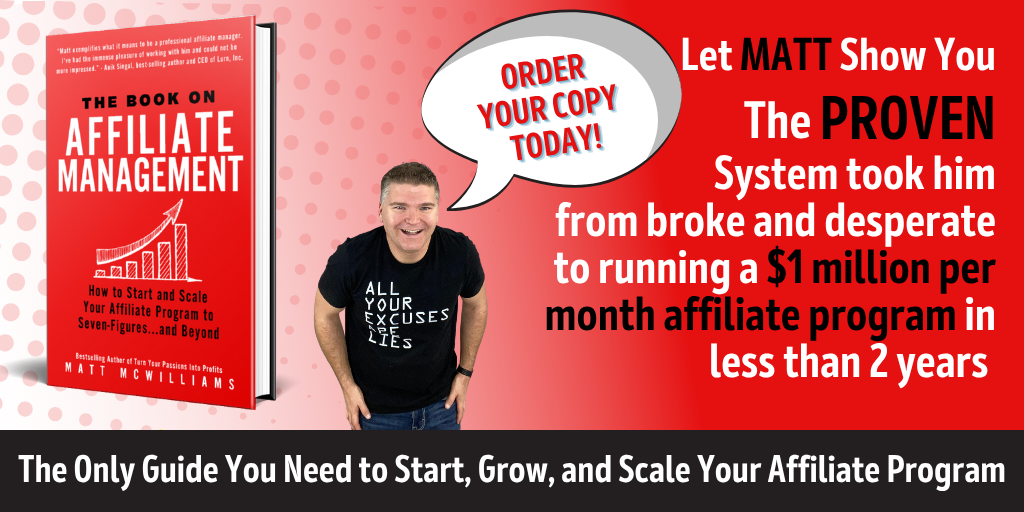
Finding the right affiliates is the hardest part for most course creators starting out. The Book on Affiliate Management covers exactly where to find affiliates, how to reach out, and what to say, including the recruiting email templates that have generated over $1 billion in affiliate sales across Matt’s programs and clients.
Setting up the technical side of a course affiliate program
Most course platforms either include affiliate tracking natively or integrate with standalone affiliate software. Teachable, Thinkific, Kajabi, and Podia all have built-in affiliate modules. The native tools are adequate for getting started, but they have limitations: reporting is often basic, cookie duration may not be configurable, and multi-tier commission structures usually aren’t supported.
Standalone affiliate software gives you more control. Tools like ThriveCart, SamCart, and PartnerStack offer deeper reporting, customizable cookie windows, and better affiliate dashboards. Choosing the right affiliate program software depends on your volume, the complexity of your commission structure, and how much your affiliates will expect in terms of a self-service portal.
Cookie duration deserves specific attention. A 30-day cookie is the minimum that makes sense for courses. Many buyers research for weeks before purchasing. A 60 or 90-day cookie gives affiliates credit for the consideration period their content created, not just the last click before checkout. Some course creators extend cookies to 180 days or offer lifetime cookies for certain affiliate tiers. Longer cookies are a meaningful recruiting advantage and cost nothing unless they generate a sale.
The setup process for a new affiliate program doesn’t have to be complicated. Setting up an affiliate program step by step covers the core decisions, software, commission rate, terms, onboarding flow, and most course creators can complete the basic infrastructure in a few days.
What to give affiliates before a course launch
 Affiliates who receive no promotional support convert at a fraction of the rate of affiliates who get a proper onboarding and asset package. This is probably the single most commonly overlooked lever in course affiliate programs. People want to promote, but they don’t want to figure out how to do it from scratch.
A basic affiliate asset package for a course launch should include: three to five pre-written email templates (for cold introduction, mid-launch follow-up, and cart close), a set of social media posts they can adapt, direct links to the sales page and any free webinar or lead magnet in the funnel, and a one-page overview of the course, its outcomes, and who it’s for. That last item is underused. Affiliates who understand the transformation they’re selling write better copy than affiliates who are just posting a link.
A walkthrough of the course itself makes a real difference. Affiliates who take even a portion of the course promote with more specificity and confidence. You don’t need to give full access before the launch. A behind-the-scenes preview, a few sample lessons, or a short video from you explaining the core methodology gives affiliates enough to speak credibly about the content. Affiliate onboarding that actually prepares affiliates to win covers this in more depth.
Consistent communication during a launch window is what separates programs that get half-hearted promotion from programs that get affiliates emailing their entire list multiple times. Getting affiliates to actually promote comes down to whether they feel supported, informed, and incentivized. Send regular launch updates. Share real-time leaderboard data. Tell them which emails are converting best. Give them a reason to stay engaged through cart close instead of sending one email and moving on.
The sample affiliate training Matt’s team shares with affiliates before a promotion is a good model for what “prepared affiliates” actually looks like in practice. You can see a real example at Sample Affiliate Training, including the slides used to walk affiliates through a promotion from start to finish.
Running affiliate contests for course launches
Affiliate contests during launch windows significantly increase the number of active promoters and the total promotion volume from existing affiliates. A simple cash bonus for the top three affiliates by sales, or a prize for the affiliate who gets the most people to a free webinar, creates a competitive dynamic that motivates affiliates who are on the fence about how hard to push.
The most effective contest structures for course launches do two things: reward total volume (which favors large-list affiliates) and reward conversion rate or new-affiliate performance (which gives smaller affiliates a realistic shot). Running two contest categories simultaneously lets you energize both ends of your affiliate base without alienating either.
Contests also give affiliates something to talk about with their audiences. “I’m in a contest right now and could use your support” is a natural call to action that doesn’t feel like pure selling. Audiences often respond to that kind of transparency with more engagement, not less.
Common mistakes course creators make with affiliate programs
 Opening the affiliate program with auto-approval is the most common structural mistake. It means anyone with a link is technically an affiliate, which creates two problems: you have no idea who’s promoting your course, and you’re exposed to low-quality traffic from affiliates who don’t match your audience. A brief application asking about audience size, primary channel, and why they want to promote takes two minutes and filters out a large share of the affiliates who would never convert anyway.
Treating the affiliate program as a launch-only channel is the second mistake. Many course creators turn their affiliate program on for a launch, generate some sales, and then let it go dormant until the next launch. That approach leaves money on the table. An evergreen affiliate structure, where affiliates can promote anytime and earn commissions on any sale, provides a consistent baseline of traffic and revenue between launches. Some course creators generate 30-40% of their annual revenue from evergreen affiliate promotion alone.
Not paying on time is the fastest way to lose good affiliates. Late or inconsistent payments get talked about in affiliate circles. A course creator with a reputation for paying on time, at a good rate, with reliable tracking becomes a preferred partner. One with payment issues gets quietly deprioritized, even by affiliates who like the product. Set clear payment terms in your affiliate agreement and honor them without exception. Running a tight affiliate program even for lower-priced offers means treating affiliates like the business partners they are.
If you want a comprehensive framework for building a course affiliate program that scales, The Book on Affiliate Management covers the full system, from structuring commissions and recruiting your first affiliates to running launch promotions and managing long-term partner relationships. And if you need a free starting point, the Your Affiliate Launch Coach free coaching call walks through exactly where you are right now and what to prioritize over the next 30-60 days.