Affiliate tracking can be GDPR compliant, but not by default. Two separate obligations apply. Storing a tracking cookie on a European visitor’s device requires prior consent under the ePrivacy Directive. Holding your affiliates’ names, addresses, and tax details requires a lawful basis, a retention limit, and a deletion process under GDPR itself.
 I get this question from business owners more than any other legal question, and it almost always arrives blurred. Someone asks “is affiliate tracking GDPR compliant” when they mean two different things at once. One is about the visitor who clicks an affiliate link. The other is about the affiliate whose bank details sit in your dashboard. Different rules, different risks, different fixes.
Before I go further: I’m not a lawyer and this isn’t legal advice. I’ve run affiliate programs with European traffic for two decades and I’ve sat through the compliance reviews. What follows is how the pieces fit together operationally. Take it to counsel before you rely on it.
Is affiliate tracking GDPR compliant?
Affiliate tracking is compliant when you obtain consent before the cookie is set and you can show a lawful basis for every piece of affiliate data you store. Tracking is not inherently illegal in the EU. Tracking without consent is.
The confusion comes from people treating GDPR as one rule. It isn’t. Cookies fall under the ePrivacy Directive, which most people call the cookie law. Article 5(3) says you need prior consent to store information on someone’s device or access information already stored there, unless that storage is strictly necessary to deliver a service the user requested. Affiliate attribution isn’t strictly necessary to deliver a blog post or a checkout page. It’s necessary to you, which is a different thing entirely.
GDPR then governs what happens after that. It sets the standard for what counts as valid consent, and it covers the personal data you hold about affiliates as people.
If you want the mechanics of how the cookie gets set in the first place, my breakdown of how affiliate tracking works covers the click-to-cookie-to-commission chain.
Do affiliate tracking cookies need consent?
 Yes, for visitors in the EU and UK. Affiliate cookies are marketing cookies, and marketing cookies require opt-in consent before they’re written.
The Court of Justice of the European Union settled the standard in the Planet49 case, decided October 1, 2019. A pre-ticked checkbox does not constitute consent. Neither does continued scrolling, nor a banner that only says “by using this site you agree.” Consent has to be a clear affirmative action.
Three practical consequences follow. Your consent banner has to load and get an answer before your tracking script fires. Rejecting has to be as easy as accepting, which is why the French regulator CNIL fined Google and Facebook a combined 210 million euros in January 2022, specifically over the difficulty of refusing compared to accepting. And you have to log the consent so you can prove it later.
Your affiliate terms should state plainly how tracking works and what data you collect, because affiliates get asked by their own audiences. The Affiliate Terms Template gives you the structure to start from instead of a blank page.
What happens to attribution when someone declines cookies?
 The sale still happens. The affiliate doesn’t get credit. That’s the honest answer, and pretending otherwise creates a worse problem than the lost commission.
If a visitor declines and then buys, your system sees a direct sale. Your affiliate sees a click that went nowhere. Do this at scale without telling anyone and you’ll spend the next year fielding accusations that your tracking is broken.
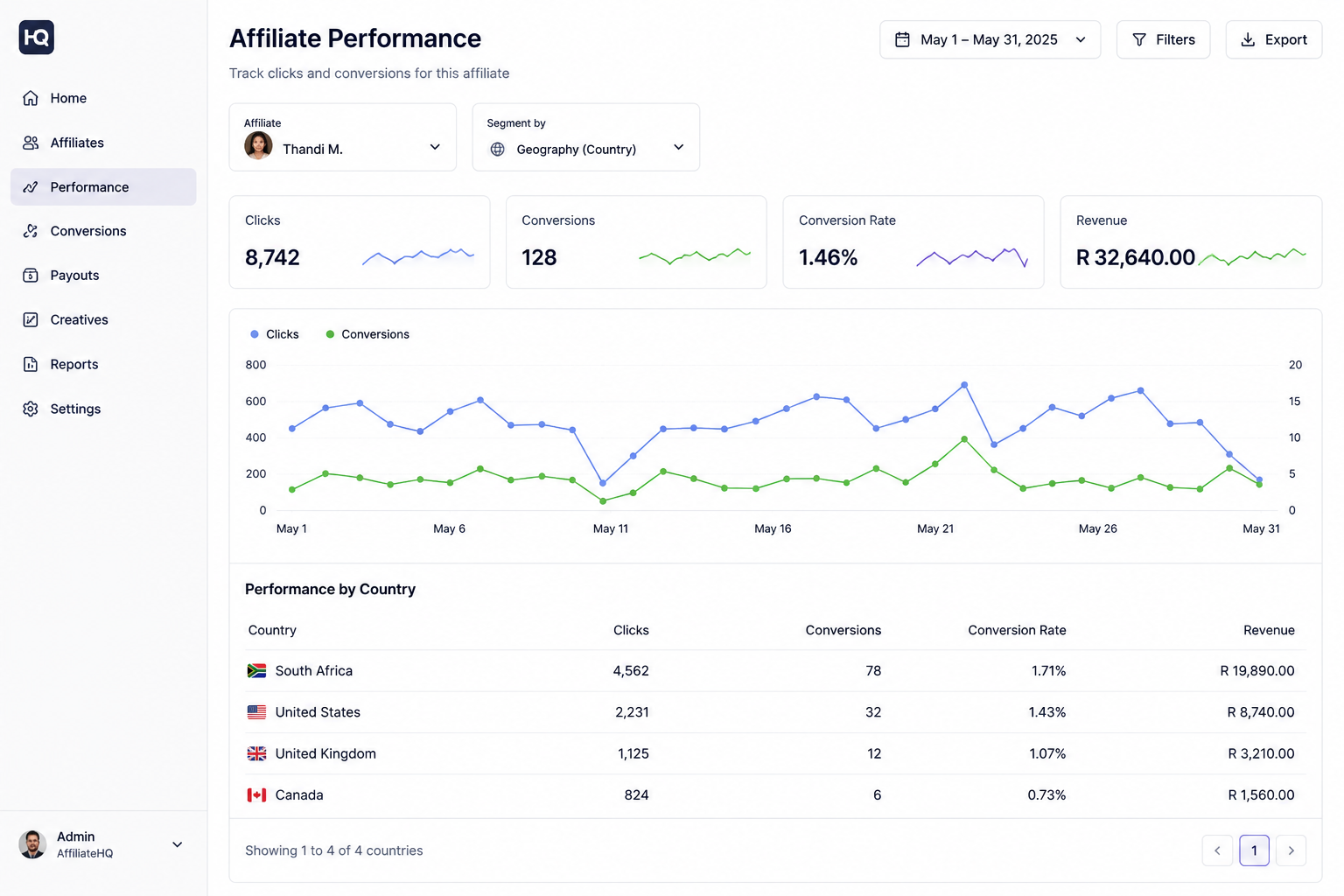
EU rejection rates vary widely by country and banner design. Germany and the Netherlands run notably higher than Southern Europe. If a meaningful share of your traffic comes from Europe, model it before you launch: assume you lose attribution on a real percentage of European clicks and decide whether that changes your commission structure or your affiliate recruiting pitch.
Two things I tell owners to do. Tell your affiliates up front, in writing, that European attribution runs lower than US attribution and explain why. And if you can, report European click volume separately so an affiliate can see the traffic they sent even when the conversion didn’t attach.
Attribution gaps and tracking disputes are the fastest way to lose a good partner. My guide on how to handle affiliate disputes walks through the conversation to have when an affiliate believes they were shorted.
Is server-side tracking a GDPR workaround?
 No. Server-side tracking changes where the processing happens. It doesn’t remove the consent requirement.
Article 5(3) applies to storing or accessing information on a user’s device. Most server-side setups still write a first-party identifier to the browser so the visitor can be recognized on return. That identifier triggers the same obligation. Even a fully cookieless fingerprinting approach reads information from the device, which regulators have consistently treated as covered.
Server-side does help with two real problems: ad blockers and Safari’s Intelligent Tracking Prevention, which caps client-side script-set cookies at seven days. If your program relies on a 60 or 90-day window, that cap quietly eats attribution regardless of GDPR. My post on what a good affiliate cookie duration looks like gets into how much that costs you.
What personal data do you collect about your affiliates?
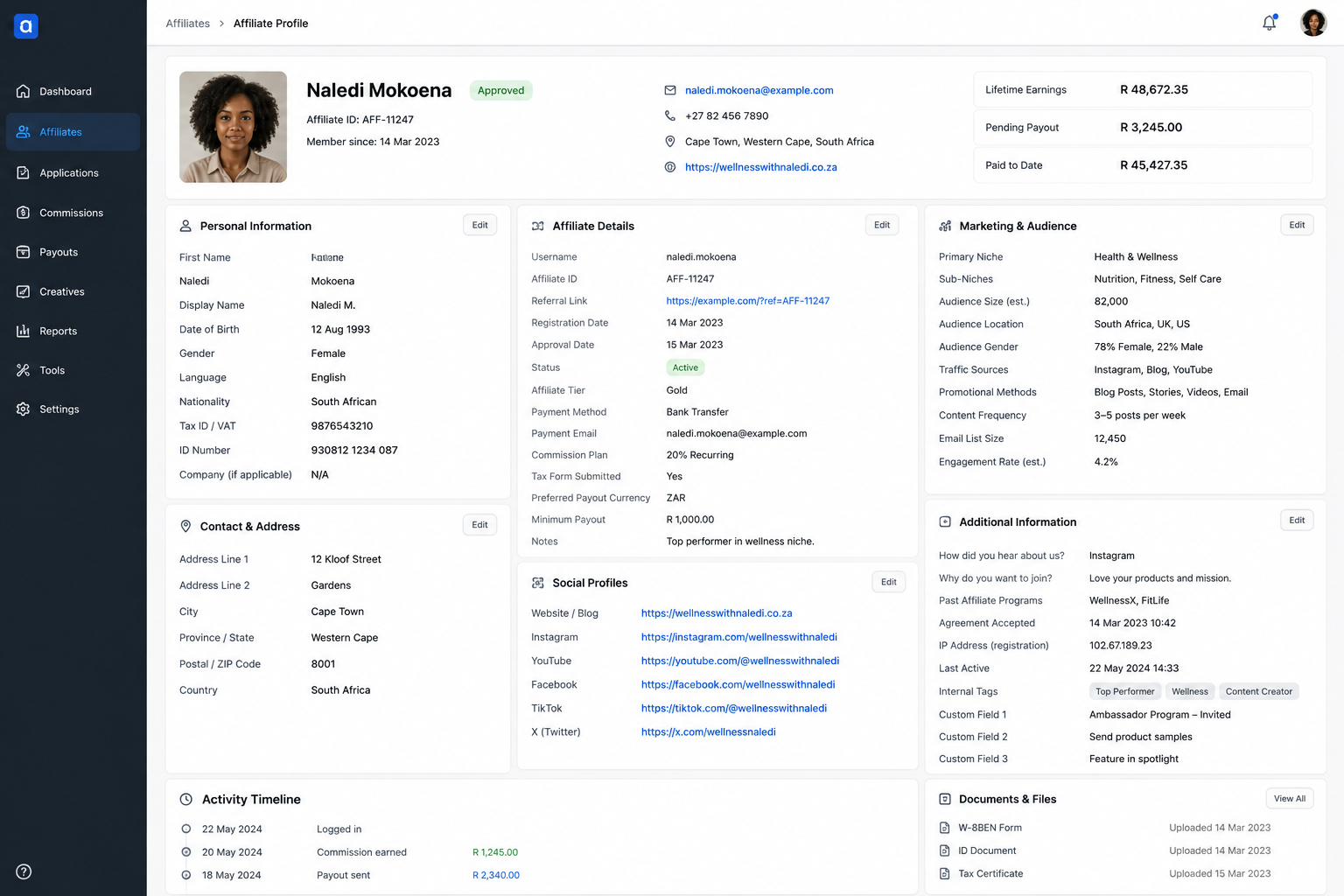
More than most owners realize. Run the inventory and the list usually includes legal name, home address, email, phone, tax identification number, bank account or PayPal details, IP address at signup, and the full click history tied to their account.
All of it is personal data under GDPR Article 4. Bank details and tax IDs carry higher exposure if you get breached.
The lawful basis for most of it is Article 6(1)(b), processing necessary to perform a contract. Your affiliate agreement is that contract, and my guide to writing an affiliate program agreement without hiring a lawyer covers what belongs in it. You need their address to pay them and their tax ID to report the payment, so you don’t need separate consent for either. Fraud monitoring usually rests on Article 6(1)(f), legitimate interest, which requires you to document the balancing test rather than assume it. The fraud prevention tools you run all process personal data, so they belong in the same inventory.
The gap I see most often: owners collect payment data through the affiliate platform, then also keep a spreadsheet copy, then also have it in email threads. Three copies, one deletion process. Find the copies before someone asks you to erase them. My rundown of how to pay affiliates covers the payout side of that data trail.
How long can you keep affiliate data?
 Only as long as you have a reason. GDPR Article 5(1)(e) requires storage limitation, meaning you set a retention period per data type and delete when it expires.
Financial records are the exception that trips people up. Tax and accounting rules across EU member states commonly require retention of payment records for six to ten years, and Germany sits at the long end. That obligation overrides a deletion request for the transaction records themselves.
A retention schedule that holds up looks roughly like this. Payment and commission records stay for the period your tax authority requires. Click and impression logs get cut at 12 to 24 months, because you have no operational reason for a five-year-old click. Marketing communication data ends when the affiliate leaves the program. Application data from affiliates you rejected goes within a few months.
Write the schedule down. If a regulator asks, “we keep everything forever” is not an answer that survives the conversation.
Retention, data handling, and termination clauses all belong in your program terms, and writing them from scratch is where most owners stall. The Affiliate Terms Wizard builds a full agreement in about 10 minutes using training from more than 1,000 attorney-written affiliate agreements.
Does an affiliate have a right to deletion?
 Yes, with limits. Article 17 gives an affiliate the right to request erasure, and you have one month to respond. Article 17(3)(b) carves out data you must keep to comply with a legal obligation.
In practice that means you delete the marketing profile, the communication history, the behavioral logs, and the login. You keep the commission payment records for the statutory period, and you tell the affiliate exactly what you kept and why. Partial deletion with a clear explanation is a valid response. Silence is not.
Two things break here for most programs. First, deleting an affiliate record cascades into orphaned commission rows, so your platform needs to anonymize rather than hard-delete the payment history. Second, the affiliate exists in your email service provider too, and deleting them in one system while they stay in the other is the failure regulators find first.
Test it before you need it. Create a dummy affiliate, run a full erasure, and check every system where that person exists.
Do you need a data processing agreement with your affiliate software?
 Yes. Article 28 requires a written contract between you as controller and any processor handling personal data on your behalf. Your affiliate platform is a processor. So is your email tool, your payment processor, and your analytics.
You are the controller. You decide what gets collected and why, which means the liability lands on you even when the vendor made the mistake.
Four questions to ask any affiliate platform before you sign. Do you provide a DPA without me having to chase it? Where are the servers, and do you offer EU hosting? What sub-processors do you use, and will you notify me before adding one? What’s your breach notification window, given that I have 72 hours under Article 33?
Vendors that answer these in a sentence each have thought about it. Vendors that route you to a support ticket haven’t. That question set belongs in any serious evaluation, alongside the functional criteria I cover in choosing the right affiliate program software.
Where does your affiliate data physically live?
Transfers of EU personal data to the United States need a legal mechanism. The European Commission adopted the EU-US Data Privacy Framework adequacy decision on July 10, 2023, which permits transfers to US companies certified under that framework. For vendors outside it, you need Standard Contractual Clauses plus a transfer impact assessment.
Check whether your affiliate platform is DPF-certified. The certification list is public and searchable. If they aren’t on it and they can’t produce SCCs, you have a problem that predates any question about cookies.
EU-hosted infrastructure removes the transfer question entirely, which is why some European merchants filter software choices by hosting region before they look at features.
What does a compliant affiliate program look like day to day?
 Less dramatic than the fine amounts suggest. Article 83 caps penalties at 20 million euros or 4 percent of global annual turnover, and the enforcement actions that get reported involve companies operating at a scale most readers aren’t near. The realistic risk for a small program is a complaint, an inquiry, and the cost of scrambling.
Six things separate the programs that hold up from the ones that don’t:
- A consent banner that blocks tracking scripts until someone accepts, with rejection as easy as acceptance.
- A written retention schedule per data type, with automated deletion where your platform supports it.
- A signed DPA with every processor, including your email service and payment rails.
- A tested erasure process that reaches every system holding affiliate data.
- A privacy policy that names affiliate tracking specifically instead of hiding it under “analytics.”
- Honest disclosure to affiliates that European attribution runs lower, stated before they promote rather than after they complain.
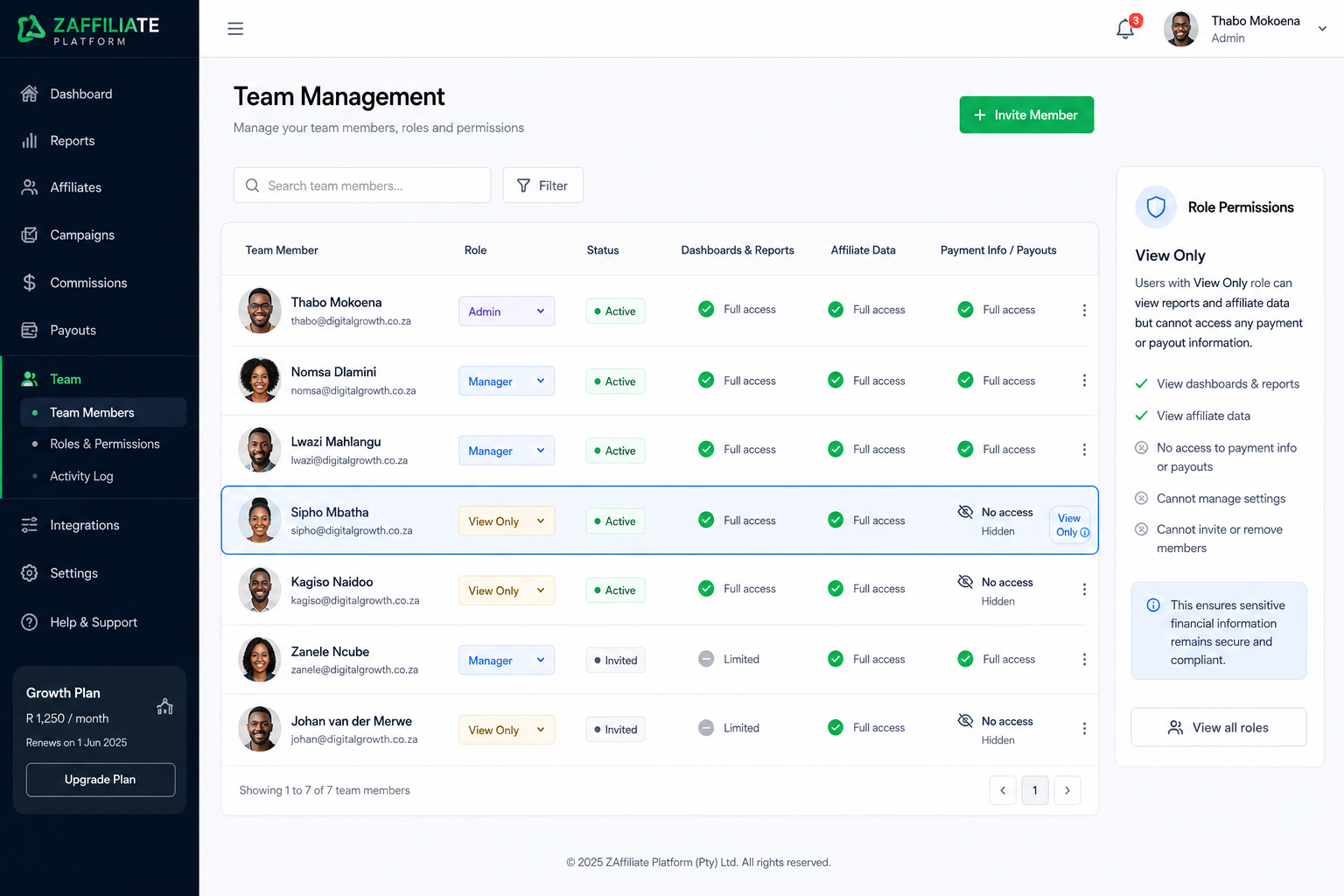
Software choice does a lot of the work here. A platform with role-based permissions limits how many people can see bank details. Per-affiliate data views make an access request answerable in minutes instead of days. I built AffiliateHQ with role-based access at three levels, Full Access, Account Manager, and View Only, because the alternative is every team member seeing every affiliate’s payment information.
Compliance is one chapter of running a program that doesn’t fall over. The Book on Affiliate Management covers the full system I used to build a program to over a million dollars a month, including the operational pieces owners skip until something breaks.
Frequently asked questions
 Does GDPR apply if my business is based in the US?
Yes, if you offer goods or services to people in the EU or monitor their behavior. Article 3(2) makes GDPR extraterritorial. Selling in dollars from a US server doesn’t exempt you when a German customer buys through a German affiliate. If you have European traffic, you’re in scope.
Can I block EU traffic instead of dealing with this?
Some merchants do, using geo-blocking at the CDN level. It works, and it costs you the revenue. I’d only consider it if European sales are a rounding error and your affiliate roster has no European partners. Otherwise the compliance work is cheaper than the lost market.
Who is responsible if my affiliate breaks GDPR on their own site?
They are, for their site. You’re responsible for what happens on yours and for what your platform does with the data. Your affiliate agreement should require compliance with applicable privacy law and give you the right to terminate over violations. The terms and conditions guide covers the clause language.
Do I need consent for affiliate tracking in the US?
Not the same way. US state laws including the California Consumer Privacy Act run on opt-out rather than opt-in, so you provide a mechanism to decline instead of asking first. Separately, the FTC requires affiliates to disclose their relationship with you, which is a labeling requirement rather than a data one. My post on the FTC’s endorsement rules covers what your affiliates owe their audiences.
What happens to attribution data an affiliate asks me to delete?
Anonymize rather than remove. Strip the identifiers and keep the aggregate performance figures, since you need the commission totals for your books and the anonymized data is no longer personal data under GDPR. Confirm your platform supports this before you’re asked.
What to do next
Start with the three items that carry the most exposure. Confirm your consent banner blocks the affiliate tracking script until someone accepts, and test it in a private browser window rather than trusting the settings page. Request a DPA from your affiliate platform today and check whether they’re certified under the Data Privacy Framework. Write a one-page retention schedule listing every data type you hold and how long you keep it.
Then run one deletion test on a dummy affiliate account and see how many systems you forgot about. That test surfaces more problems than reading another article will. And once the data side is settled, my step-by-step launch guide covers the rest of the build.